
The Coverage Gaps Most Churches Don't Know They Have

Your church carries insurance. You pay the premiums faithfully, year after year. You've checked the box — and that gives you peace of mind.
But here's the hard truth most church leaders don't discover until it's too late: having insurance and having the right insurance are two very different things.
After working with churches of all sizes across Texas — from small congregations meeting in storefronts to multi-campus ministries — the same gaps show up again and again. Not because church leaders aren't careful. Because standard insurance policies weren't designed with the unique needs of a faith community in mind.
This guide walks through the most common coverage gaps we see, what they mean in real terms, and the questions you should be asking your agent right now.
The 7 Most Common Church Coverage Gaps Actual Cash Value vs. Replacement Cost
This is the single most important coverage question for any church that owns property — and it's the one most church leaders have never thought to ask. When your property is insured for actual cash value, the insurance company pays what your building or contents are worth today, after depreciation. When it's insured for replacement cost, they pay what it actually costs to rebuild or replace at current prices.
Why it matters: This one distinction could be the difference between your church rebuilding fully after a loss or spending years trying to make up the gap. Always verify whether your property policy is replacement cost or actual cash value — and get a current appraisal if you haven't had one recently.
Roof Exclusions, Especially Wind and Hail
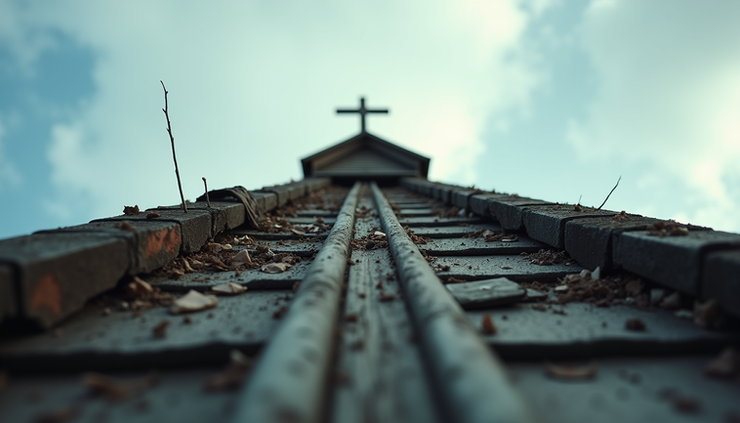
This gap deserves extra attention. Wind and hail are among the most frequent causes of significant property damage across the state — and many church property policies include roof exclusions or limitations that church leaders never notice until they file a claim.
Some policies exclude wind and hail damage to roofs entirely. Others cover it only if the roof meets a certain age threshold — meaning a 15-year-old roof may receive little or no coverage even after a direct hit. Some policies pay actual cash value on roofs regardless of whether the rest of the policy is replacement cost.
Why it matters: A hailstorm that damages your roof can trigger a six-figure replacement — and finding out after the fact that your policy limits or excludes that coverage is a devastating discovery for any congregation.
No Business Personal (BPP) Coverage
Most people think of church insurance as covering the building. But what about everything inside it? Pews, chairs, tables, sound equipment, musical instruments, computers, kitchen appliances, projectors, office furniture — the contents of a church facility can represent hundreds of thousands of dollars in value. Business Personal Property (BPP) coverage protects those contents. Many basic church policies either exclude BPP entirely or include a limit so low it doesn't reflect the actual value of what's in the building.
Why it matters: Ask your agent specifically what BPP limit is on your policy, then walk through your facility and think honestly about what it would cost to replace everything you see. Most churches are surprised by how far apart those two numbers are.
Theft Exclusion Without a Monitored Alarm
Many church property policies include a theft exclusion that applies specifically when the premises does not have a central station monitored alarm system. This means that if someone breaks in and steals your equipment, instruments, or other contents — and you don't have a monitored alarm — your policy may not respond to the theft claim at all. This catches churches off guard because they may have a basic alarm system that is not professionally monitored.
Why it matters: Check your policy's theft provisions carefully to see if a monitored alarm is required for theft coverage. The cost of professional monitoring is almost always less than the cost of an uncovered theft loss.

No Business Income / Loss Use Coverage
magine your church experiences a significant fire and it will take eight months to repair before the building is usable again. Where will your congregation meet? Who pays for the temporary space? And if your church operates a daycare, school, or other revenue-generating ministry, where does that income come from while you're displaced? Business Income coverage — sometimes called Loss of Use — is designed to address exactly this situation. It covers the loss of revenue and the extra expenses a church incurs when a covered loss prevents normal operations.
Why it matters: For churches with schools, daycares, or significant rental income, this coverage is not optional — it's essential. But even for congregations without those revenue streams, the cost of temporary space and the disruption to giving patterns during a prolonged closure can be severe.
Volunteer Liability
Volunteers are the backbone of most churches. But when a volunteer gets injured doing church work — or accidentally injures someone else — who pays? Many churches assume their general liability policy covers volunteers automatically. Often, coverage exists but with limitations worth understanding. What if a volunteer on a work crew falls from a ladder? The answers depend heavily on your specific policy language.
Why it matters: Ask your agent to walk you through exactly how your policy responds to volunteer injury and volunteer-caused incidents — both on and off your property. Don't assume; verify.
Sexual Misconduct & Abuse (SAM) Coverage
Sexual misconduct and abuse claims are among the most costly and devastating situations a church can face. They're also frequently misunderstood from a coverage standpoint. Many general liability policies either exclude SAM claims entirely or handle them in ways that church leaders don't fully understand. Even when SAM coverage is included, the limits, the structure (defense inside or outside limits), and the specific triggering conditions vary significantly from policy to policy.
Why it matters: This coverage is non-negotiable for any ministry that works with children or vulnerable adults. Verify that it exists, understand the limits, and know whether legal defense costs are inside or outside those limits
.
Is It Time For A Review?
Every gap above shares a common thread: church leaders discovered the problem only after something went wrong. The policy was in place. Premiums were being paid. But the specific coverage needed for the specific situation either wasn't there or wasn't sufficient.
Questions to Ask Your Insurance Agent
Is our property insured at replacement cost or actual cash value
How does our policy respond to wind and hail damage on a roof that's 10+ years old?
What is our Business Personal Property limit, and when did we last update it?
Does our policy require a central station monitored alarm for theft coverage?
Do we have Business Income or Loss of Use coverage — and what does it cover?
Are volunteers covered under our liability policy, both on and off our property?
Do we have Sexual Misconduct and Abuse coverage? What are the limits, and is defense inside or outside those limits?
Not Sure If Your Church Has These Gaps?
Insurance is one of the most important stewardship decisions your church makes. It protects the building where your congregation gathers, the equipment that supports your ministry, the people who serve it, and the mission that drives all of it.
Getting it right isn't complicated — but it does require asking the right questions, working with an agent who understands the specific needs of faith communities, and doing a real coverage review at least once a year.
A coverage review costs nothing and could protect everything. Let's look at your current policy together and make sure your ministry is truly protected.


Comments